
Faith & Finance
14 min read
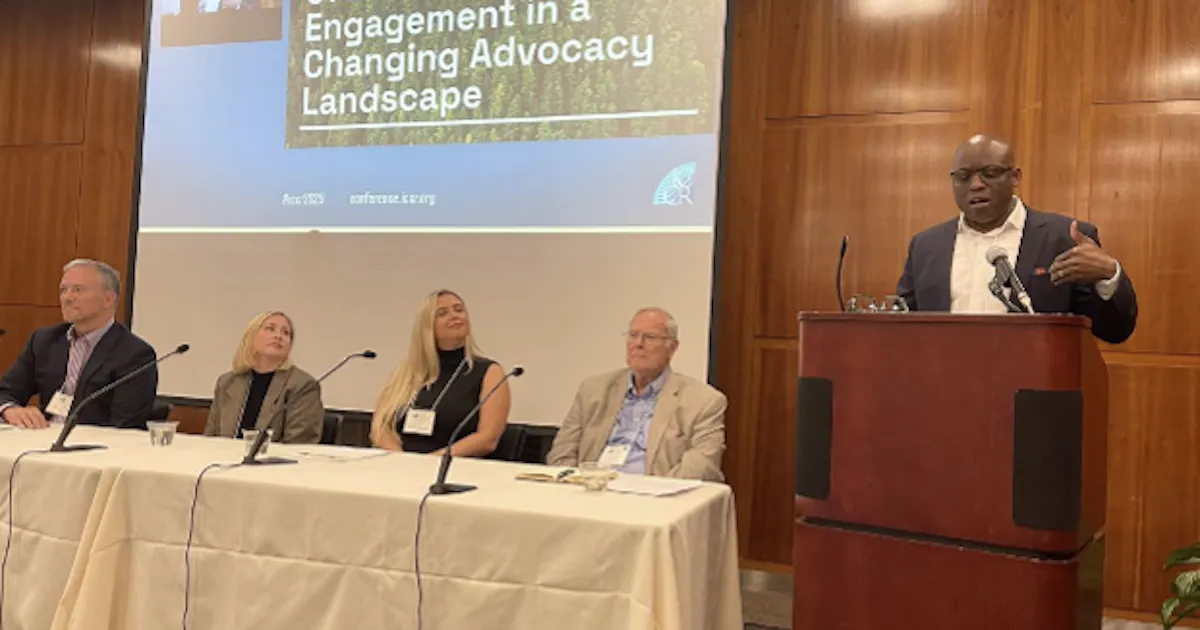
Stewardship and Shareholder Power: Why Engagement Matters
by Minoti Dhanaraj
Director of Responsible Investing, PBUCC
For more than five decades, faith‑based and values‑driven investors have played a pivotal role in shaping corporate accountability and advancing social and environmental responsibility. At the forefront of this work is the Interfaith Center on Corporate Responsibility (ICCR)—of which the Pension Boards was a founding member in 1971.
ICCR is a global coalition of investors collectively stewarding approximately $4 trillion in assets to influence corporate behavior on issues ranging from climate change and human rights to corporate governance and financial transparency.
Through collaborative engagement, shareholder advocacy, and moral leadership, ICCR and its 350 members have helped redefine the role of investors—not merely as owners of capital, but as agents of ethical and systemic change. This legacy is deeply intertwined with the history of the United Church of Christ (UCC), whose early leadership in corporate engagement, particularly during the struggle against Apartheid in South Africa, helped lay the groundwork for modern shareholder advocacy.
In this conversation with Timothy (Tim) Smith, Senior Policy Advisor of ICCR, we explore ICCR’s mission, history, and impact; reflect on the UCC’s formative role in faith‑based corporate engagement; and examine how investor advocacy has evolved amid shifting political, regulatory, and market pressures. We also look ahead to emerging strategies—such as manager engagement and bondholder engagement—and the ongoing challenges and opportunities facing investors committed to sustainability, human rights, and long‑term value creation.
Minoti: Tim, can you share your background, something most people may not know about you, and any affiliation you may have with the UCC?
Tim: I grew up in Canada and attended the University of Toronto. I then came to New York City to attend Union Theological Seminary. While a Union student, I did field work with the United Church of Christ, staffing a program addressing Apartheid in South Africa. When I graduated from Union, I started work at ICCR's predecessor, based at The Interchurch Center in New York, also the headquarters of the United Church of Christ at that time. I worked with ICCR until 2000, serving as Executive Director. Then I moved to Boston to work with Boston Trust Walden, an investment firm very dedicated to working on sustainable and responsible investing. When I stepped down from that post in 2022, I returned to ICCR as a Senior Policy Adviser, working on a whole range of issues, and fortunate enough to work closely with the United Church of Christ as well. I attend South Church in Andover Massachusetts, an active UCC congregation.
Minoti: Can you tell us about ICCR, its purpose, and its members?
Tim: ICCR is 55 years old and presently has 350 investors as members with assets under management of over $4 trillion. For over five decades, ICCR and its members have been actively working on a whole range of issues related to corporate social responsibility and sustainable investing. A central focus is helping coordinate initiatives of members as they engage companies and file shareholder resolutions. ICCR works on literally dozens of issues, including climate change, diversity, human rights, health issues, labor rights, political spending, and lobbying, among others.
“The UCC was a critical catalyst in the early days. For example, the United Church of Christ helped create a joint effort of faith-based investors challenging companies that were investing in Apartheid South Africa. In the early days, there was no road map written for investors or companies for that matter, on how to engage with each other.”
Minoti: The UCC’s journey in corporate engagement dates back to the 1960s, particularly in response to Apartheid. During this period, the UCC was among the faith-based organizations that actively challenged companies to withdraw their business operations in South Africa. Can you share your involvement in responding to Apartheid and this chapter of the church’s history?
Tim: The UCC was a critical catalyst in the early days. For example, the United Church of Christ helped create a joint effort of faith-based investors challenging companies that were investing in Apartheid South Africa. In the early days, there was no road map written for investors or companies for that matter, on how to engage with each other. I can remember the United Church Board for World Ministries actively addressing Mobil Oil regarding its South African business. One of the early resolutions requested companies like Mobil do a report about its role in South Africa. And indeed, Mobil Oil, in a groundbreaking move, agreed with the proposal by the United Church of Christ and actually published such a report sending it to every single investor in the company. This was an important early precedent as major companies began to pay attention to major human rights challenges. The United Church of Christ was one of the founders of ICCR in the early 1970s, working together with five other denominations to create an organization that has blossomed 55 years later into a broad-based organization of religious- and values-based investors.
Minoti: Over the years, what has changed with corporate engagements, focus areas, and impact? How has the current political environment impacted the practice?
Tim: In the early years, the faith community was considering the best ways to engage companies and make their case. There was no roadmap guiding us. The South African case was a moral and ethical call for action by companies. But gradually, we learned our case resonated best when it clarified what the value for a company would be in taking the actions proposed. Now, you see most engagements with companies and shareholder resolutions making a strong business and financial case for the company to address the issue on the table.
Investors have also learned that they have a wide range of tools available to use in their work as ethical investors and advocates for corporate responsibility. Certainly, private conversations and shareholder resolutions are very important tools. But when faith-based investors work with major pension funds, foundations, investment firms that are committed to sustainability, and other investors, they certainly build an influential base to engage companies and government.
At present, on issues like climate change, diversity, health, human rights, and many others, our advocacy as investors is under severe attack—including from the federal government, the Securities Exchange Commission, and also at the state level where conservatives have decided to attack the ability of investors, such as ICCR, as they address companies on key social and environmental issues. This wave of attack is unprecedented, and in response, we are working with other investors to make sure our rights as owners of companies are protected.
Minoti: Investment managers have been backsliding on issues such as climate disclosures and diversity, equity, inclusion, and belonging (DEI&B) initiatives. Can you share more on how ICCR has brought together investors, like the Pension Boards-UCC, in collaborative discussions with managers?
Tim: Unfortunately, investment managers like BlackRock, State Street, Vanguard, and many others, have been seriously attacked for their positions on issues like climate change. This has resulted in considerably more caution from these managers as they decide what to say and do publicly. Interestingly enough, in Europe, and other countries, asset owners are strongly pushing these same managers to continue to be leaders in sustainability. Thus, managers note that they are under pressure from both ends of the spectrum.
“For several years, the United Church of Christ has joined with other investors, holding meetings with managers and holding them accountable for their proxy voting and their positions on key social and environmental issues.”
Unfortunately, this has resulted in many investment managers changing their voting pattern on shareholder resolutions and being much less willing to vote in favor of a reasonable shareholder proposal. One investment firm decided not to vote in favor of any shareholder proposals on environmental and social issues in the last two years, a gross dereliction of their duties as a fiduciary.
Outside of proxy voting, many investment firms have retreated on their positions on Equal Employment Opportunity and diversity, facing fierce attacks from the federal government. In this case, they are in the same camp as other companies and universities that also have been challenged for their advocacy for diversity. This is why it is so important for the United Church of Christ, alongside other investors, to actively engage their investment managers—making it clear they are clients who expect their portfolios to be managed responsibly and in alignment with their values. Obviously, major investment firms are going to listen to their clients. For several years, the United Church of Christ has joined with other investors holding meetings with managers and holding them accountable for their proxy voting and their positions on key social and environmental issues.
Minoti: Can you share some tangible results of those manager engagements?
Tim: Certainly. These engagements with managers remind them they may lose clients if they stray far from the former commitments they had on sustainability. For example, in Europe, a number of major pension funds in the U.K. and The Netherlands, actually pulled business from investment companies because they felt as their manager, they no longer represented their mission and values. These engagements are important and must continue, but unfortunately, there has not been a great deal of success in changing manager behavior.
However, it is important to stress that there are many investment firms, some of which the United Church of Christ uses, that do vote their shares more responsibly, and are more than willing to engage us as their clients. One such investment firm is TIAA, which had thoughtful discussions with us about sustainability issues they believe are important for them as managers. They have stood firm on many of the issues that the United Church of Christ values.
Minoti: More recently, ICCR created a Bondholder Working Group, in which the Pension Boards’ core fixed income team is involved. Can you share more on that working group and the impact you hope it creates?
Tim: At our members’ request, ICCR created a new working group for fixed income investors to discuss how as bondholders they could use their voice and influence in the markets in support of environmental, social, and governance issues. While some work had been going on for decades by fixed-income owners, the power and responsibility of fixed-income owners has not received the attention it deserves. Now we see bondholders acknowledging that they do have influence and power as they buy billions of dollars of bonds in the market. The United Church of Christ joined this working group from the beginning and has given helpful presentations explaining how they try to insure the UCC’s values are reflected in their role as a bondholder.
“Now we see bondholders acknowledging that they do have influence and power as they buy billions of dollars of bonds in the market. The United Church of Christ joined this working group from the beginning and has given helpful presentations explaining how they try to insure the UCC’s values are reflected in their role as a bondholder.”
One additional example that many religious groups and other ICCR investor members have implemented is setting a goal to have fixed-income invested in companies or municipalities with specific positive environmental and social impacts. For example, whether it's the United Church of Christ or the United Methodist Church, over the decades there have been hundreds of millions of dollars invested in low-income housing, or in targeted investments that have a direct impact in a positive way on people's lives. These are ethical criteria guiding the investment process rather than just purchasing the latest bond off the shelf.
Minoti: Thank you Tim for all the insightful information.
Watch the full interview with Timothy Smith, "Taking a Stand: ICCR's and the UCC's Historic Role in Responding to Apartheid."
Creating Lasting World Impact Through Sustainable Investing
The journey toward a more sustainable future is one we take together. Explore the stories, insights, and partnerships shaping our sustainable investing strategy in Because of Ministry…Stewarding Your Assets for a More Just World, a Pension Boards Sustainability Report. Learn how faith-driven investing is helping to create lasting positive outcomes for people, communities, and the planet. Explore how your investments contribute to long-term financial wellbeing and work toward creating a just world for all.
by Minoti Dhanaraj
Minoti Dhanaraj is the Director, Responsible Investments for The Pension Boards-United Church of Christ, Inc. She joined the Investment team at the Pension Boards in 2018. Minoti has over 20 years of experience in the financial services industry, most recently as a Senior Investment Officer at The Employees’ Retirement Fund of the City of Dallas and a Research Analyst at Neuberger Berman. Minoti received her BBA in Finance from the University of Texas at Austin and an MBA from the University of Chicago.
by Timothy Smith, Senior Policy Advisor, Interfaith Center on Corporate Responsibility
Timothy Smith serves as ICCR’s Senior Policy Advisor, where he supports ICCR’s work around responsible political engagement, deepening engagements with asset managers, and responding to the pushback on ESG, as well as serving as a mentor for ICCR members and staff. He is one of ICCR’s founding staff members and has been a leader in the field for over five decades. Tim served as ICCR staff for 30 years, including 24 years as its Executive Director. In 2000, Tim joined Boston Trust Walden where he led the organization’s shareholder engagement efforts for 22 years. In 2007, 2012, and 2013, Tim was named one of the “Top 100 Most Influential People in Business Ethics” by Ethisphere Institute. In 2010, he received the Bavaria Award for Impact at the third annual Joan Bavaria Awards for Building Sustainability into the Capital Markets. In 2011 and 2012, he was named one of the most influential people in corporate governance by the National Association of Corporate Directors, and in 2016 Tim received ICCR’s Legacy Award for his enduring record of demonstrated influence on corporate policies. Tim has served on multiple boards and chaired advisory councils for several different institutions. He recently served as chair for Shared Interest, which mobilizes economic resources for communities in Southern Africa. Tim earned a B.A from the University of Toronto and Master of Divinity degree from Union Theological Seminary.
We all agree on the mission—invest the assets held in trust for retirement wisely and prudently, while maximizing the positive impact on climate change, human rights and providing capital to empower those challenged by a lack of economic success.David A. Klassen
Chief Investment Officer at the Pension Boards
RELATED ARTICLES
Reimagining Human Potential: Developing Tomorrow’s Workforce in an AI World
Investing for a Just and Sustainable Future
POPULAR RESOURCES
Why Sustainability Matters: 2024-25 Sustainability Report
The Pension Boards' 2024-25 Sustainability Report, themed "Why Sustainability Matters," centralizes on the organizations' commitment to corporate social responsibility and responsible investing by way of its journey and recent advancements in four areas: alignment; integration; impact; and engagement.
Evercall Magazine: A UCC Lifetime Retirement Income Plan Edition
An exploration of perspectives of retirement from the lens of continued engagement in ministry, affecting real-world change, and securing lifetime income and legacy during active ministry years.