
Faith & Finance
10 min read

Reimagining Human Potential: Developing Tomorrow’s Workforce in an AI World

by Minoti Dhanaraj
Director of Responsible Investing, PBUCC
Over the years, the Pension Boards has been investing in private market funds aligned with impact
themes rooted in United Church of Christ values. One of these impact themes, education and human capital development, is invested in through one of our managers, Lumos Capital Group. The fund invests in private companies that develop technologies, tech-enabled services, and platforms in the global human capital development market. These investments span across the full age spectrum of early childhood, K-12, higher education, workforce development, and corporate learning. Their mission is to invest in companies that bring high quality, accessible and equitable educational and training opportunities to drive a more prosperous and inclusive future for everyone.
To explore this theme in greater depth, we invite James Tieng, Managing Partner & Co-Founder of Lumos Capital Group, for an insightful discussion. James will share insights into his and his co-founders’ professional journeys, the evolving landscape of the human capital development industry, Lumos’s mission-driven investment approach, and their impact on communities like those serving UCC churches.
“…we see Scriptural alignment for what we do in our professional and personal lives tied to God’s calling towards human flourishing. Our building of Lumos and our partnerships with mission-aligned investors like the Pensions Boards and the UCC very much speak to this connection.”
Minoti: James, our teams met over seven years ago and we instantly connected—not just professionally, but through the faith-based values you and your co-founder, Victor Hu, share. Can you discuss your connection to the church?
James: Victor and I bonded in the years prior, as we both attended the same church—Redeemer Presbyterian Church in New York City. Through that bond, we knew we had similar faith values and a Gospel worldview that informs how we see professional mission and vocational calling. Specifically, we see Scriptural alignment for what we do in our professional and personal lives tied to God’s calling towards human flourishing. Our building of Lumos and our partnerships with mission-aligned investors like the Pensions Boards and the UCC very much speak to this connection. A guiding verse for me is Mark 8:36 (NIV): “What good is it for someone to gain the whole world, yet forfeit their soul?”
Minoti: You and Victor are very committed to the purpose and mission of the human capital development industry. Can you share how your family and professional background relate to this sector?
James: For me, education is deeply personal. Growing up in New Jersey, I had an appreciation from a young age for the transformative journeys my parents experienced living in an underdeveloped island named Bohol in the Philippines, and for their journey to the U.S. for graduate education. My father had the blessing to come to New York City in the early 1960s to pursue his M.B.A., and my mother had the similar good fortune in the early 70s of completing her medical residency in Philadelphia. Educational opportunity unlocked so much for them—and ultimately my family. The contrast between the middle class suburban upbringing they provided for me and my siblings relative to their home island (e.g., unpaved roads, limited hot water, no working toilets) was quite stark. It was something I witnessed firsthand on regular summer trips we made in the 80s and 90s.
I’ve now spent 20 years in private equity, first working as a management consultant after my undergraduate degree. The last 14 years have been focused exclusively on human capital development. Earlier in my career arc, I served on the boards of two schools—one K-8 parochial school serving a diverse population in the Lower East Side of Manhattan, and the other my parochial high school in northern New Jersey—and also engaged in other nonprofit initiatives including consulting for a charter school in post-Katrina New Orleans, Louisiana. In business school, I studied courses like education entrepreneurship and reform and nonprofit governance. Ultimately, I merged my personal passion for the space, desire for societal impact, and my professional toolkit into the work I do at Lumos.
“We invest in companies that are looking to have meaningful impact on educational and employment outcomes, raising the bar across our impact pillars centered on outcomes (educational and employment), access (cost and affordability), and equity (addressing system gaps).”
Minoti: At a high level, could you share what your organization invests in and an example that may be relevant to UCC members?
James: At Lumos, we approach the full age spectrum of learning from early education through K-12, higher education, and workforce development. We invest in companies that are looking to have meaningful impact on educational and employment outcomes, raising the bar across our impact pillars centered on outcomes (educational and employment), access (cost and affordability), and equity (addressing system gaps).
Our companies include technologies, services, and learning solutions that touch on all these segments. Examples include virtual tutoring for K-8 students who are not performing at grade level in core areas like reading and math; science kits for K-12 classrooms based on more affordable open educational resource curriculum; outplacement services and job support for employees in transition; consulting solutions for colleges and universities in need of transformation to grow and meet evolving student and employer needs; digital apprenticeships that tie lower-cost education to accredited programs; and many others.
Minoti: Recently, job losses due to advancement in AI have become a significant concern. How are Lumos’ investments helping to reskill individuals (redemptive investing) for the future?
James: Many of our companies are aligned with reshaping the trajectories of individuals who may be facing disruption from the current environment. This includes companies like:
· Podium that works with some of the larger industry players in this space, such as OpenAI, to foster immersive project-based learning opportunities for current undergraduates.
· Thrive Career Wellness has support services and tools for governments, employers, and employees going through workforce transitions, such as layoffs.
· Open Classrooms works to equip underemployed individuals with apprenticeships paired with accredited self-paced programs.

These are a few examples of how redemptive investing addresses the societal pain points that prevent any person from reaching their potential. This work certainly begins in the early years, and companies like Learning.com introduce AI and digital literacy in K-8 to foster not only responsible usage of technology, but the scaffolding of skills to be able to navigate and leverage the growing tools around us that will enhance learning, building tangible interests and skills that carry on regardless of the profession one chooses.
Minoti: Your team has been speaking with various denominations. What are some key questions and takeaways you are hearing from clergy and members?
James: Across the constituents we meet, there is without a doubt considerable recognition that we are facing significant change as to what children and adults need to learn to be successful, how they will learn, and the need for a different understanding of why we must learn vs. humanity being lessened by automation.
At the same time, learning makes us distinctly human. Being created in God’s image, we are all called to lean into what it means to be part of God’s creation, individually and as a society. Underpinning much of this is the value of human relationships and the importance that faith supersedes worldly ambition and troubles. Technology is remarkable. It will only continue to gain capabilities that in the best case can serve humankind, but also the greater good—a calling for something beyond this world or ourselves. Those are transcendent ideals that bring more meaning especially when framed with a Gospel worldview.
Minoti: Thank you James for your partnership and sharing Lumos’s mission-driven investment approach with us.
Watch the full interview with James Tieng, "Learning from Clergy: A Commitment to Humanity."
Creating Lasting World Impact Through Sustainable Investing
The journey toward a more sustainable future is one we take together. Explore the stories, insights, and partnerships shaping our sustainable investing strategy in Because of Ministry…Stewarding Your Assets for a More Just World, a Pension Boards Sustainability Report. Learn how faith-driven investing is helping to create lasting positive outcomes for people, communities, and the planet. Explore how your investments contribute to long-term financial wellbeing and work toward creating a just world for all.
by Minoti Dhanaraj
Minoti Dhanaraj is the Director, Responsible Investments for The Pension Boards-United Church of Christ, Inc. She joined the Investment team at the Pension Boards in 2018. Minoti has over 20 years of experience in the financial services industry, most recently as a Senior Investment Officer at The Employees’ Retirement Fund of the City of Dallas and a Research Analyst at Neuberger Berman. Minoti received her BBA in Finance from the University of Texas at Austin and an MBA from the University of Chicago.
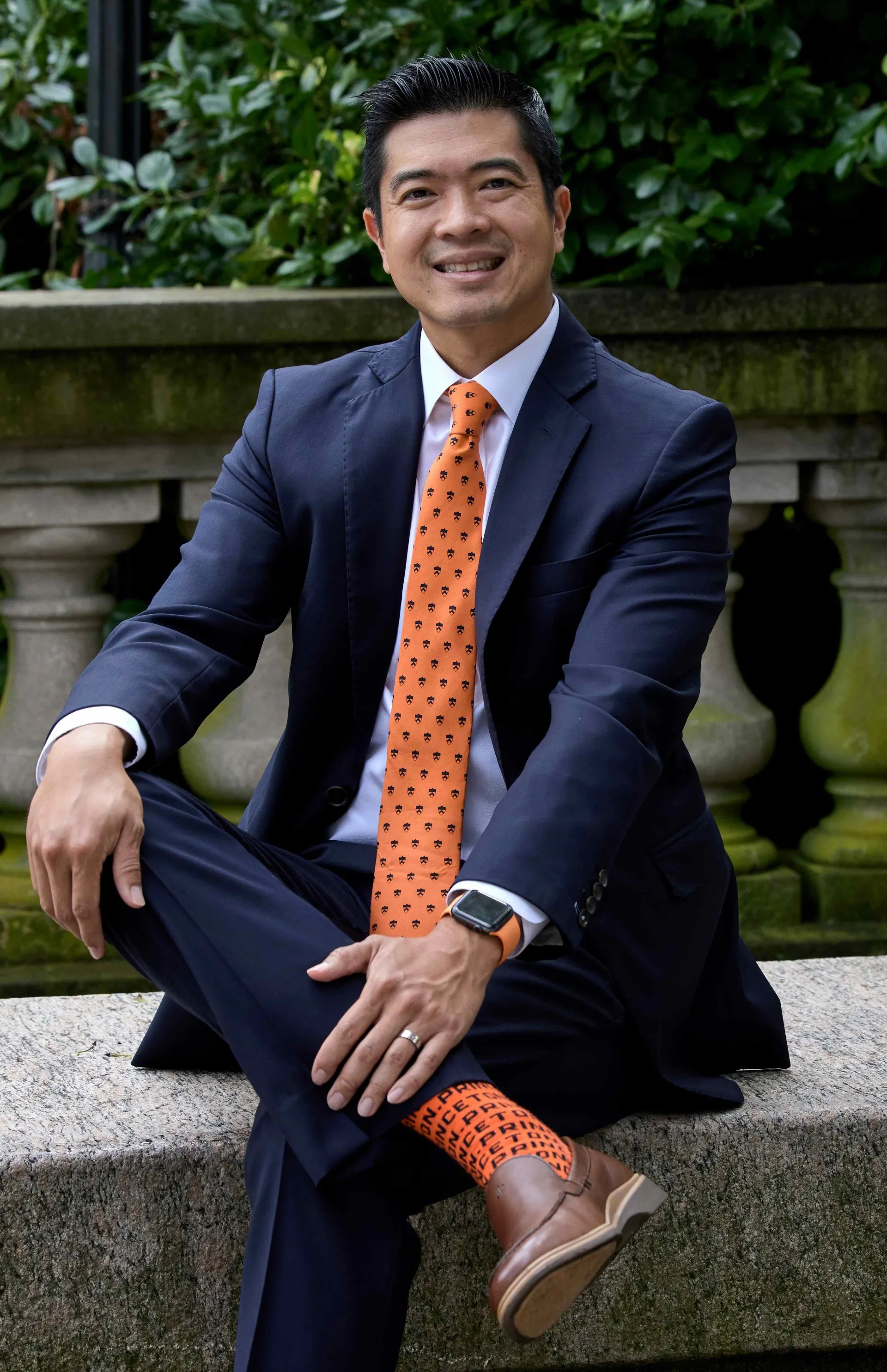
by James Tieng, Co-Founder and Managing Partner, Lumos Capital Group
James Tieng is Co-Founder and Managing Partner of Lumos Capital Group, a growth-stage private equity firm focused on education and human capital development. With 20 years of investing experience, James has led and completed over 20 platform transactions (majority and minority deals), having deployed over $1.8 billion of equity in education, software, business services, and digital media companies. His investments have ranged in enterprise value from less than $10 million to over $1 billion. Prior to co-founding Lumos, James was a Principal at Quad Partners, a private equity firm focused exclusively on the education sector. Previously, he was with Apax Partners, where he focused on financial, business and digital services investments around the world. Prior to Apax, James was an investment professional at Irving Place Capital. He began his career at McKinsey & Company, where he worked on strategy, M&A and corporate finance engagements across a variety of industries. James received an M.B.A. from Harvard Business School and earned an A.B. in Economics from Princeton University with certificates in Finance and Political Economy. James lives in New York City with his wife (a K-12 educator) and two rambunctious boys who love playing chess, piano, and tennis.
We all agree on the mission—invest the assets held in trust for retirement wisely and prudently, while maximizing the positive impact on climate change, human rights and providing capital to empower those challenged by a lack of economic success.David A. Klassen
Chief Investment Officer at the Pension Boards
RELATED ARTICLES
Stewardship and Shareholder Power: Why Engagement Matters
Investing for a Just and Sustainable Future
POPULAR RESOURCES
Why Sustainability Matters: 2024-25 Sustainability Report
The Pension Boards' 2024-25 Sustainability Report, themed "Why Sustainability Matters," centralizes on the organizations' commitment to corporate social responsibility and responsible investing by way of its journey and recent advancements in four areas: alignment; integration; impact; and engagement.
Evercall Magazine: A UCC Lifetime Retirement Income Plan Edition
An exploration of perspectives of retirement from the lens of continued engagement in ministry, affecting real-world change, and securing lifetime income and legacy during active ministry years.