
Faith & Finance
10 min read

Investing for a Just and Sustainable Future
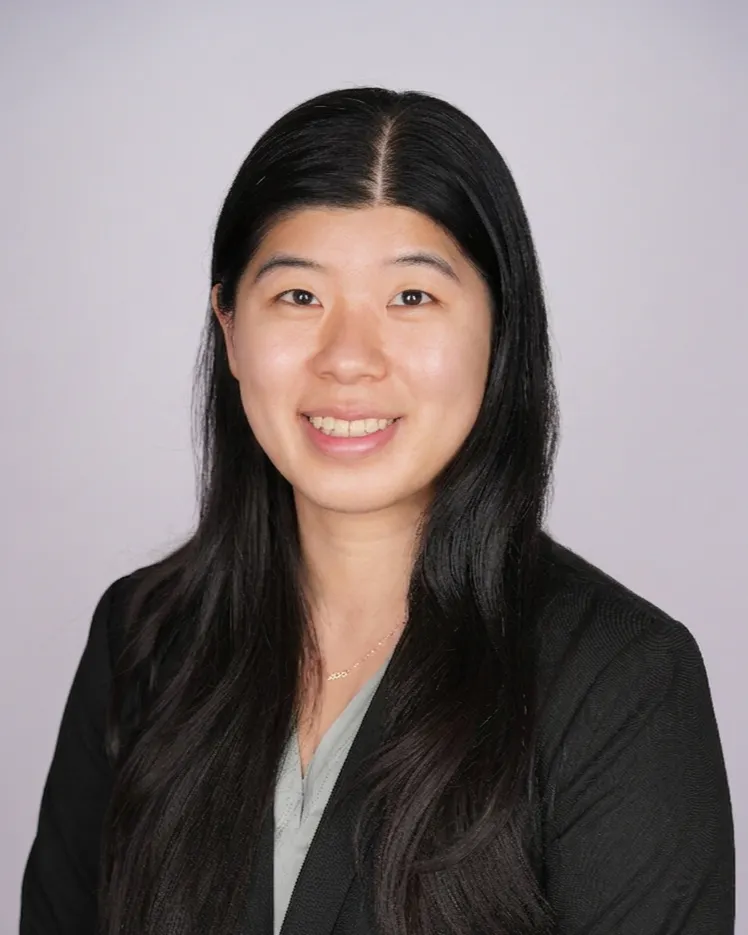
by Vanessa Wong, CFA, Associate, Investments
For more than three decades, Ceres, a nonprofit advocacy organization, has been a driving force at the intersection of capital markets, corporate responsibility, and environmental stewardship—working to accelerate the transition to a cleaner, resilient, and more just global economy.
Founded in the wake of the Exxon Valdez oil spill, Ceres has grown into a powerful convener of institutional investors and businesses committed to addressing climate change, nature loss, and systemic sustainability risks. The Pension Boards has been a proud member of the Ceres Investor Network since 2008, collaborating with peers to amplify investor voices and advance long-term value creation.
To better understand Ceres’ impact and the evolving landscape of responsible investing, I sat down with Chris Fox, Senior Director at Ceres Investor Network. In this conversation, Chris reflects on his career-long commitment to sustainability, what sets Ceres apart as an advocacy organization, and how investors can continue to lead—grounded in both fiduciary duty and a deep commitment to justice—during a time of rapid change and global challenge.
Vanessa: Chris, could you tell us a bit about your background and how you came to Ceres? What makes Ceres so unique compared to other environmental nonprofit organizations?
Chris: I have worked my entire career for nonprofits dedicated to tackling climate change and building a more just and sustainable world. After earning a master’s degree at Harvard Divinity School, I was hired by Ceres in 200* to launch a new program—the Ceres Investor Network—to support investors in addressing climate change, as well as sustainability risks and opportunities.
Ceres is unique from other nonprofit groups as it was created by institutional investors and environmental leaders to support business and government action on sustainability. Ceres was founded in 1989 in the months after the Exxon Valdez oil spill in Alaska, an ecological disaster that galvanized the movement for greater corporate environmental responsibility. Today, Ceres works with hundreds of institutional investors and businesses in our networks and initiatives to address climate change, nature loss, water scarcity, and other sustainability issues.
One highlight of my work at Ceres is when I met with Pope Francis in 2017 at a Vatican meeting aimed at building global cooperation on climate change. When it was my turn to shake Pope Francis’s hand, I thanked him for his 2015 encyclical “on the care for our common home” that played such an important role in building public support for governments to adopt the Paris Agreement on climate change.
Vanessa: The Pension Boards has been a participant in some of your many working groups, helping investors dialogue with top polluting companies on issues related to climate change. Can you tell us more about Ceres’ work with investors?
Chris: Ceres supports Investor Network members and investors that are part of our global investor initiatives—including Climate Action 100+1, Paris Aligned Asset Owners*, and Nature Action 100*—as they work to set goals, manage financial risks and opportunities, publish transition plans, and navigate the shift to a cleaner, more resilient economy.
Ceres provides resources that inform investors about material issues that can impact their portfolios and long-term value. We benchmark companies across key sectors to help investors identify progress and where gaps remain. Ceres also hosts hands-on workshops, working groups, and virtual briefings to help investors learn from experts and each other. The Pension Boards has taken part in several of these offerings, which have helped the Pension Boards amplify its voice by working with many of the world’s largest investors.

Vanessa: In addition to a love of God’s creation, justice is an incredibly important principle for the United Church of Christ. How does Ceres incorporate environmental justice in its day-to-day operations and decision-making?
Chris: Ceres incorporates justice throughout its governance, programs, and operations. We have environmental justice leaders on the Ceres Board and work closely with organizations representing frontline communities, as well as religious institutional investors, to inform and strengthen our efforts to advance a more just economy.
“One way Ceres has put environmental justice into our programs is by supporting investors and companies in working for a just transition. While the transition to a clean energy economy will provide many benefits, there will also be transitional challenges for workers, communities, and countries, particularly those that heavily rely on fossil fuels to fuel their economies, or as a source of employment.”
One way Ceres has put environmental justice into our programs is by supporting investors and companies in working for a just transition. While the transition to a clean energy economy will provide many benefits, there will also be transitional challenges for workers, communities, and countries, particularly those that heavily rely on fossil fuels to fuel their economies, or as a source of employment. Ceres has collaborated with our global partners to develop a just transition work stream in the Climate Action 100+ initiative and just transition guidance for investors.
Vanessa: In a time of significant shifts in environmental policy and sustainable investing, how is Ceres navigating the current landscape? Where do you see momentum, and how can we as investors best support and strengthen this work?
Chris: The external context in the U.S. has been challenging for investors and businesses working to address climate change risks and opportunities. Through our Freedom to Invest initiative, we have leveraged investors, pension funds, and other market voices to point out that considering material climate risk is a mainstream business practice, existing as a part of prudent risk management and fiduciary responsibility. Freedom to Invest has achieved this through engaging state and federal policymakers to ensure that investors, financial institutions, and companies can consider environmental risk in decision-making and protecting the shareholder proposal process.
“The bottom line is that climate risk is a financial risk. Investors will not relinquish their freedom to manage risks. Asset owners can support these efforts by continuing to set clear expectations for their asset managers, actively engaging companies and policymakers, and sharing their experiences with peers.”
The bottom line is that climate risk is a financial risk. Investors will not relinquish their freedom to manage risks. Asset owners can support these efforts by continuing to set clear expectations for their asset managers, actively engaging companies and policymakers, and sharing their experiences with peers.
Vanessa: In the face of the significant challenges of mitigating climate change, what gives you hope and sustains your commitment?
Chris: What sustains my commitment is that hundreds of businesses, investors, and governments worldwide—including many U.S. states and cities—are still addressing climate risks and opportunities. The global race to clean energy is unstoppable: $2.3 trillion was invested in the energy transition in 2025—up 8% from 2024, according to Bloomberg New Energy Finance.
What gives me hope is knowing there are so many people worldwide dedicated to the same mission: scaling up solutions to the climate crisis, protecting nature, and accelerating the transition to a just and sustainable world of peace and prosperity for all.
Vanessa: Thank you, Chris, for an inspiring conversation on the role investors can play in advancing a just and sustainable global economy.
Watch the full interview with Chris Fox, "Committed to Environmental Accountability."
----------------------------------------------------------------
*Climate Action 100+: The world's largest investor engagement initiative on climate change, involving over 700 investors with over $68 trillion in assets. It targets 170+ of the biggest corporate greenhouse gas (GHG) emitters to improve governance, curb emissions, and strengthen disclosures. The initiative is set to run to 2030.
*Paris Aligned Asset Owners: A global group of 57 asset owners managing over $3.3 trillion in assets, committed to transitioning their portfolios to net-zero GHG emissions by 2050 or sooner. They use the Net Zero Investment Framework to deliver on their commitments
*Nature Action 100: A global investor-led initiative focused on tackling nature and biodiversity loss. It supports and encourages urgent action from companies to protect and restore nature and ecosystems, addressing the systemic risk of biodiversity loss.
Creating Lasting World Impact Through Sustainable Investing
The journey toward a more sustainable future is one we take together. Explore the stories, insights, and partnerships shaping our sustainable investing strategy in Because of Ministry…Stewarding Your Assets for a More Just World, a Pension Boards Sustainability Report. Learn how faith-driven investing is helping to create lasting positive outcomes for people, communities, and the planet. Explore how your investments contribute to long-term financial wellbeing and work toward creating a just world for all.
by Vanessa Wong, CFA, Associate, Investments
Vanessa joined the Pension Boards’ Investment team in 2025, responsible for collecting and analyzing manager and market data, and evaluating and monitoring investment managers in all asset classes. Prior to joining the Pension Boards, Vanessa worked at Ceres as an Investor Network Manager. Prior to Ceres, she was a Wealth Advisor Associate at Morgan Stanley and Equity Specialist at Bloomberg LP. Vanessa holds a Bachelor of Business Administration in Accounting and Finance, minor in English Studies from The University of Hong Kong. Vanessa is also a CFA charterholder and is IFRS SASB FSA Certified.

by Chris Fox, Senior Director, Investor Network
Chris is Senior Director, Investor Network at Ceres, where he is focused on supporting investor action on climate change. Among his many roles at Ceres since 1997, Chris co-founded the Ceres Investor Network on Climate Risk and Sustainability in 2003, co-founded the Ceres policy program in 2009, and has helped launch and implement several international initiatives including Climate Action 100+ and the Investor Agenda. Before joining Ceres, Chris served as a program associate at the Heinz Family Foundation in Washington, D.C. He was also executive director of the Center for Environmental Citizenship, a national nonprofit organization he co-founded. Chris has a bachelor's degree from Yale University and a Master of Divinity degree from Harvard University.
We all agree on the mission—invest the assets held in trust for retirement wisely and prudently, while maximizing the positive impact on climate change, human rights and providing capital to empower those challenged by a lack of economic success.David A. Klassen
Chief Investment Officer at the Pension Boards
RELATED ARTICLES
Reimagining Human Potential: Developing Tomorrow’s Workforce in an AI World
Stewardship and Shareholder Power: Why Engagement Matters
POPULAR RESOURCES
Why Sustainability Matters: 2024-25 Sustainability Report
The Pension Boards' 2024-25 Sustainability Report, themed "Why Sustainability Matters," centralizes on the organizations' commitment to corporate social responsibility and responsible investing by way of its journey and recent advancements in four areas: alignment; integration; impact; and engagement.
Evercall Magazine: A UCC Lifetime Retirement Income Plan Edition
An exploration of perspectives of retirement from the lens of continued engagement in ministry, affecting real-world change, and securing lifetime income and legacy during active ministry years.