
Faith & Finance
9 min read

Bondholder Engagement: Influence Without a Vote

by Andrew Russell
Director, Fixed-Income Investments, Pension Boards - United Church of Christ, Inc.
For many years the Pension Boards has been active in shareholder advocacy. Alongside partners such as the Interfaith Center on Corporate Responsibility (ICCR), we have engaged companies as equity owners—filing resolutions, participating in dialogue, and using the tools available to shareholders to encourage responsible corporate behavior.
But equities are only part of the story.
A significant portion of the investments we manage on behalf of our members are in bonds. And that raises an important question: What does engagement look like when we do not have a vote?
Bondholders do not elect directors. We do not file resolutions. Our relationship with an issuer is defined by a contract, not by governance rights.
And yet, bondholders still matter.
We provide long-term capital. We influence how organizations finance themselves. And, when we are thoughtful and consistent, we can help shape expectations around transparency, accountability, and long-term responsibility.
In many ways, this is a quieter form of influence. But it is not a lesser one. It is simply differently-rooted—less in authority, and more in stewardship.
“Bondholder engagement does not begin with a vote. It begins with decisions about capital. Every time we participate in a bond issuance, hold a position, or decide to step back, we are making a judgment. Over time, those decisions send signals—about risk, credibility, trust, and values.”
Where Does the Influence Comes From?
Bondholder engagement does not begin with a vote. It begins with decisions about capital.
Every time we participate in a bond issuance, hold a position, or decide to step back, we are making a judgment. Over time, those decisions send signals—about risk, credibility, trust, and values.
The moment of greatest influence is often at issuance. When an organization comes to market, it is not just raising capital—it is telling a story. As investors, we have the opportunity to ask questions:
· What will the proceeds be used for?
· How are risks being managed?
· What kind of reporting should we expect after the bond is issued?
Today, faith-based bondholders increasingly look for three things:
1. forward-looking governance;
2. enhanced engagement and reporting; and
3. a demonstrated commitment to continuous improvement.
We want management teams that are not simply reacting to immediate pressures but thinking responsibly about long-term resilience—whether related to affordable housing, climate transition, workforce stability, or operational risk.
We expect clear disclosure at issuance and honest reporting afterward. Because bondholders do not vote, information matters even more. Transparency becomes one of the primary tools of stewardship.
And we pay attention to whether issuers improve over time. We are not looking for perfection. We are looking for credibility, consistency, and follow-through.
Those questions to bond issuers are not abstract. They are part of our responsibility to be careful stewards of the resources entrusted to us. In that sense, our work as investors is also a reflection of our faith—how we choose to use what has been entrusted to our care.

Our Approach: Start with Use of Proceeds
At the Pension Boards, our approach to bond investing is grounded in a simple idea: what the money is used for matters.
We have invested several hundred million dollars in sustainable bonds—green bonds, social bonds, and even blue bonds—along with similar instruments where proceeds are directed toward specific purposes. These include affordable housing, environmental projects, and clean water.
For the United Church of Christ, affordable housing is not merely an economic issue; it is a matter of dignity, justice, and community. When capital supports stable housing, essential services, and stronger neighborhoods, investment becomes connected to mission.
This is not about expecting perfection. It is about asking for honesty, clarity, and follow-through.
“For the United Church of Christ, affordable housing is not merely an economic issue; it is a matter of dignity, justice, and community. When capital supports stable housing, essential services, and stronger neighborhoods, investment becomes connected to mission.”
Why does this matter? Because a significant portion of the assets entrusted to the Pension Boards is invested in bonds. The way we approach those investments—what we support, what we question, and what we choose not to finance—has real-world implications. It shapes not only financial outcomes, but also the kinds of communities, institutions, and projects that are ultimately supported by that capital.
A Practical Example
To make this more concrete, consider a large regional bank issuing a social or sustainability bond.
In that setting, the conversation is not about directing the bank’s strategy. Instead, it is about asking grounded, practical questions before committing capital.
· How will the proceeds support communities—perhaps through affordable housing or small business lending?
· How will those commitments be measured and reported?
· How does this issuance fit within the bank’s broader approach to risk and responsibility?
As bondholders, we are not in a position to mandate outcomes. But we can ask for clarity. We can look for alignment between what is said and what is done. And over time, we can choose to support issuers that demonstrate consistency and transparency.
That, in a very real sense, is what engagement looks like in fixed income.
Part of a Larger Whole
Bondholder engagement does not replace shareholder advocacy—it complements it.
Equity and debt investors see the same organization from different angles. Shareholders focus on governance and long-term growth. Bondholders tend to focus more on resilience, stewardship of capital, and the preservation of value.
Both perspectives matter. Together, they offer a fuller understanding of how institutions operate and endure.
Being Realistic About the Limits
It is also important to be clear about what bondholders cannot do.
We do not have formal mechanisms to compel change. The investor base is broad and not always coordinated. And disclosure in credit markets is not always as consistent as we would like.
There are also moments when we have to balance financial objectives with mission priorities. That, too, is part of responsible stewardship.
But these limitations do not make engagement irrelevant. They simply call for patience, humility, and consistency.
Looking Ahead
Bondholder engagement is still developing. It does not have the same visibility as shareholder activism, but it is becoming more defined—and more important.
For the Pension Boards, this is an area we expect to continue building on. That includes deepening our conversations with issuers, maintaining a disciplined approach to sustainable investing, and contributing to clearer expectations across the market.
This work is often incremental. It does not always produce immediate results. But over time, it adds up.
Because while bondholders may not vote, they do help decide where capital flows. And in doing so, they participate in shaping outcomes—not only for markets, but for communities.
That, in its own way, is a form of stewardship.
Creating Lasting World Impact Through Sustainable Investing
The journey toward a more sustainable future is one we take together. Explore the stories, insights, and partnerships shaping our sustainable investing strategy in Because of Ministry…Stewarding Your Assets for a More Just World, a Pension Boards Sustainability Report. Learn how faith-driven investing is helping to create lasting positive outcomes for people, communities, and the planet. Explore how your investments contribute to long-term financial wellbeing and work toward creating a just world for all. Learn More.
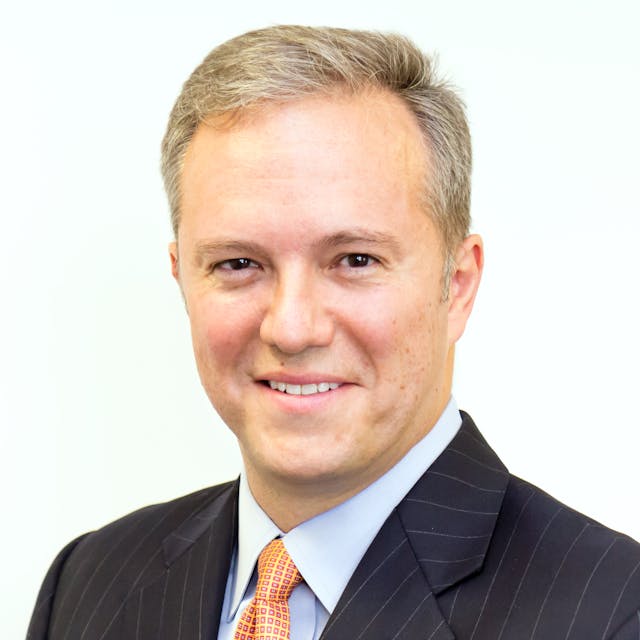
by Andrew Russell
Andrew Russell is Director of Fixed-Income Investments and a member of the Investment Team at the Pension Boards-United Church of Christ. He leads a team of investment professionals who are responsible for all internally managed fixed-income investments.
We all agree on the mission—invest the assets held in trust for retirement wisely and prudently, while maximizing the positive impact on climate change, human rights and providing capital to empower those challenged by a lack of economic success.David A. Klassen
Chief Investment Officer at the Pension Boards
RELATED ARTICLES
Beyond Clean Energy: Investing in the Climate Transition
Advancing Our Sustainable Investing Strategy: Protecting Sustainable Use of Water and Marine Resources in Latin America
POPULAR RESOURCES
Why Sustainability Matters: 2024-25 Sustainability Report
The Pension Boards' 2024-25 Sustainability Report, themed "Why Sustainability Matters," centralizes on the organizations' commitment to corporate social responsibility and responsible investing by way of its journey and recent advancements in four areas: alignment; integration; impact; and engagement.
Evercall Magazine: A UCC Lifetime Retirement Income Plan Edition
An exploration of perspectives of retirement from the lens of continued engagement in ministry, affecting real-world change, and securing lifetime income and legacy during active ministry years.