
Managing Money For Today
5 min read
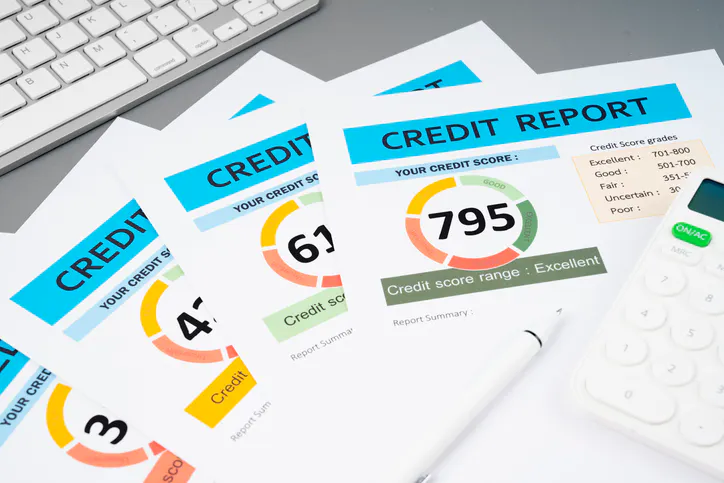
The Importance of Credit Reports

by Travis Marks, CFP®, CFA®
Pension Boards-United Church of Christ, Inc.
Clergy are often called upon not only to guide their communities in faith, but also to offer counsel on practical matters—finances included. One such area that impacts the financial health of individuals and families alike is the credit report.
Understanding credit reports are essential for anyone looking to improve their credit score as this impacts on their ability to purchase a home or take out a loan. We’ll review the importance of credit reports and cover the basics.
Why is a Credit Report Important to Your Financial Health?
A credit report is vital for financial health because it influences your ability to access credit and services by providing lenders and others with a detailed summary of your credit history, which helps determine your reliability as a borrower or tenant. A good report can secure loans with better interest rates, help you rent an apartment, and qualify for lower insurance premiums, while also serving as a tool to detect fraudulent activity and identify potential errors in your financial records.
Why Checking Your Credit Report Is Important
Checking your credit report is a key step in gaining control of your finances. It allows you to:
- Spot Errors and Fraud: By reviewing your report, you can identify mistakes or unauthorized activity, such as credit inquiries you didn’t make or accounts you didn’t open. Disputing errors with the credit bureau can protect your financial reputation and prevent identity theft.
- Understand Your Financial Standing: Your credit report summarizes your payment history, debt balances, and types of credit used. Lenders, insurers, employers, and landlords often use this information to assess your reliability and determine the terms they offer you.
- Improve Your Credit Score: Regularly checking your report helps you understand the factors that influence your score—such as payment history, credit utilization, and length of credit history. Addressing issues can help you qualify for better loan rates and save money over time.
How to Take Action
Here are practical steps you can take, based on your document and organizational resources:
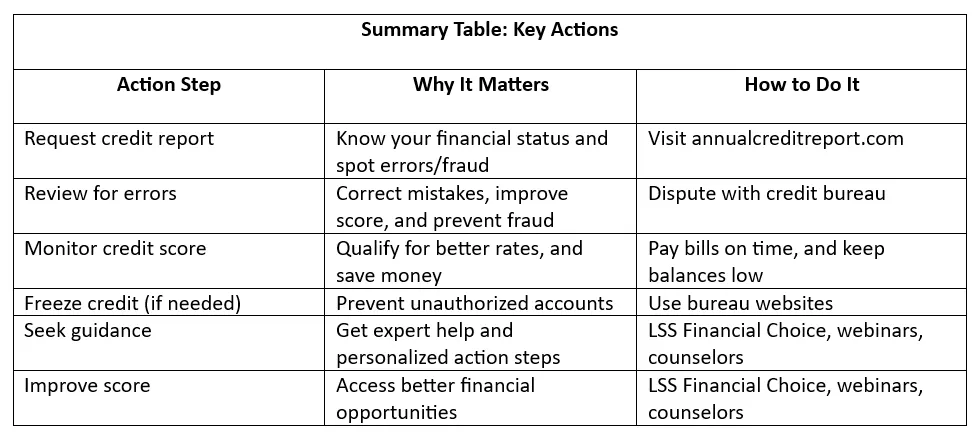
Request Your Credit Report
You can get a free credit report once a year from each of the three major bureaus: Equifax, Experian, and TransUnion. Visit https://www.annualcreditreport.com to get started.
Review for Errors and Outdated Information
Check for mistakes or outdated negative information. If you find errors, dispute them directly with the credit bureau. This can help raise your score and prevent future issues.
Monitor Your Credit Score
Your score is based on five main factors: payment history (35%); debt balances (30%); length of credit history (15%); new credit (10%); and credit type (10%). Focus on paying bills on time and try to keep debt balances below 30% of your credit limits. If you have a bank account or credit account, it’s likely you can obtain your credit score frequently throughout the year. You can also visit myfico.com to obtain your score.
Freeze Your Credit (if needed)
A credit freeze is a strong defense against fraud. It prevents new accounts from being opened in your name without your knowledge. You can freeze your credit through each bureau’s website. See helpful links below.
· Transunion: transunion.com/credit-freeze
· Equifax: equifax.com/personal/credit-report-services/credit-freeze/
· Experian: experian.com/freeze/center.html
Seek Professional Guidance
The Pension Boards offers access to financial counselors, webinars, and tools to help you improve your financial situation. Through our partnership with LSS Financial Choice, counselors can provide personalized advice and action steps at no cost to you. Learn more here.
Get Help with Your Finances. Call an LSS Financial Choice Counselor
Pension Boards’ members and their immediate family members have access to six free financial counseling sessions, which include consumer credit counseling, budget and debt management, student loan repayment, housing counseling, and more. Start your journey to financial wellness today by calling 833.975.0719 from 9:00 a.m. to 6:00 p.m. ET.

by Travis Marks, CFP®, CFA®
Travis Marks, CFP®, CFA®, is the Director of Generations University for the Pension Boards, responsible for the education initiatives for Pension Boards members, employers, and internal staff. Prior to joining the Pension Boards, Travis worked as Senior Manager of the National Financial Education Practice (FEP) for PricewaterhouseCoopers. He has more than 16 years of financial planning, education, and management experience, and has a passion for helping people improve their finances.
The advice I would give other clergypersons in unique financial situations is just practice the basics of creating a budget and sticking with it.Rev. Michael L. Sloan
First Congregational Church of Spencerport, NY
RELATED ARTICLES
Tips for Paying Down Debt
Get No-Cost Support for the Homebuying Process
POPULAR RESOURCES
Setting SMART Financial Goals
Setting financial goals can motivate you to save money. When these goals are SMART, you’re more likely to achieve them.
Budgeting Worksheet
A cash flow budget is all about tracking the timing of your income and expenses to make sure you have enough from week to week.