
Faith & Finance
13 min read

Environmental Stewardship—for People and the Planet
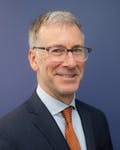
by David A. Klassen, CFA
President and Chief Executive Officer, Pension Boards-United Church of Christ.
As people of faith, we are called to care for God’s creation—not only in word and worship but in the choices we make each day. Environmental Stewardship through Responsible Investing, a General Synod 35 workshop sponsored by the Pension Boards, invites us to explore how we use the resources entrusted to us to benefit God’s people and planet.
In a time of climate crisis and environmental degradation, where the health of the planet is directly tied to the wellbeing of our community, our investments have the power to do good in our world—where income is the outcome through our retirement investments, and people and the planet can thrive.
I led a conversation with Lan Cai, Chief Investment Officer for the Pension Boards-UCC, Matthew Illian, Director of Responsible Investments, United Church Funds, and Jim Antal, Special Advisor on Climate Justice to the General Minister and President of the United Church of Christ, to discuss our sustainable investing journey over the past decade, and strides which have been made since responding to the General Synod Resolution “Urging Divestment – Along with Other Strategies – From Fossil Fuel Companies to Address Climate Change” in 2013.
Our investments can indeed be a powerful way to live out our faith, caring for creation, protecting the vulnerable, and building a future rooted in justice and hope on behalf of our churches, our ministers, and the people we serve.
What follows are edited excerpts from our panelists from the recorded workshop.
—David A. Klassen, President and CEO, The Pension Boards-United Church of Christ, Inc.
How the Church is Positioned to Lead in Sustainable Investing
The United Church of Christ is a distinctive player in this field—making it the envy of other denominations. When the UCC became the first national body and the first religious body to vote to divest from fossil fuel companies in 2013, I did my best to convince Synod that “we're not radical, we're just early.” So, the reason we're early is our UCC forebearers were driven by God's dream. Archbishop Desmond Tutu was fond of saying, “God's dream— that we can reconcile all of God's creation by transitioning to a world free of fossil fuel.”
When we took that vote, almost every news outlet in the country—over 200 of them covered our action. Archbishop Desmond Tutu wrote to me personally, saying, ”We hope others will follow your splendid example.” And here we are, 12 years later—portfolios worth over $40 trillion have purged their fossil fuel stocks. And of the over 1,600 institutions that have divested, 35% of them are religious institutions. This is a response that neither Bill McKibbon (American environmentalist and author) nor I ever imagined. And yet, it shows what the finance leaders of many churches and denominations recognize—how we invest our capital matters, not only materially, but morally.
—Jim Antal
Working in Partnership
What we hear from our clients is they're especially grateful that the UCC not only made a resolution but then took action. UCF’s Beyond Fossil Fuels Fund provides great synergy within the church by enabling local churches and ministries to invest with their values. However, to be honest, I always see room for improvement. I believe we can improve in the ways that we are partnering together—local churches, financial ministries, and denominations— working together to promote a low carbon economy that focuses on justice at the center. We really need to figure out how to work better together to ensure that the people who are most impacted have the tools to work with the church, and with their financial partners to move this forward in a just way.
—Matthew Illian
I wrote the 2013 resolution to divest from fossil fuels, initially, and then worked several hours with the United Church Funds staff to make changes before going to the committee at Synod. When the committee heard that United Church Funds and I agreed on an edited version, the committee said, “Oh my God, let's just adopt it."
Every time I met with a local church wanting a fossil fuel free alternative, the financial advisors of every single one of those local churches laughed in my face, said, “What are you crazy? A balanced portfolio without an investment in fossil fuel? You're nuts!” And then United Church Funds came out with a Beyond Fossil Fuel Fund. Two or three years after that, every financial institution was offering it. The UCC paved the way.
—Jim Antal
A 10-Year Journey
The Pension Boards has more than a 10-year track record. In 2015, we introduced climate risk-mitigating screens to the Pension Boards’ portfolio. For example, on the environmental side, we screen out companies that are exploring and producing thermal coal and tar sands*. The year prior to 2015, our fixed income team invested in our first green bond investment, where proceeds were earmarked to support lending projects in the fields of renewable energy and energy efficiency.
In 2016, we adopted the Faith and Finance policy with regard to how the Pension Boards will differentiate itself through the theological lens to both do good and do well. We invested in private equity that directly affects climate change, such as the EnCap Energy Transition Fund, which focuses on low carbon renewable power infrastructure, battery storage, and carbon management investments.
In 2018, the Pension Boards became a United Nations Principle for Responsible Investments (UNPRI) signatory—a gold standard of sustainable investment globally, which represents over 5,000 institutional investors with $120 trillion in assets. In 2023, we reported our work in categories such as policy, governance, strategy, and manager selection. The Pension Boards scored well above the median in all modules measured. In 2021, we launched the Sustainable Balanced Fund. The journey continues.
—Lan Cai
Commitment to Responsible Investing—A Moral, Fiduciary Responsibility
It’s a really critical moment, and as faith-based investors or as religious institutions, we have a moral and fiduciary responsibility to consider not just financial returns, but also the values that we hold deeply to make sure that these things are in alignment. So one of the things we did recently was take a trip down to Washington, DC, in partnership with the UCC policy office, and we set up meetings with congresspeople, and their staff to talk about how we think protecting our Constitutional rights to invest in alignment with our religious values. So, in partnership with the Pension Boards, we're not backing down or pulling away from our commitment to responsible investing. We think this is a really unique moment for religious institutions and faith-based investors to stand up and say, “We're going to continue to do what we do because it's the right thing.”
—Matthew Illian
Impact—Driving Real-World Change
The Pension Boards invested in a venture capital fund called Builders VC Fund. One of the underlying companies that they invest in is 280 Earth. It is the first scalable platform for direct air. It is a spin-off from Google X, which is known for its moonshot factories, but this one has actually landed already. It utilizes the waste heat from the data center to do three things: 1) provide the cooling system service for the data center; 2) extract CO2 from the ambient air; and 3) generate water. They are using advanced technology to use both solid and liquid absent for direct air capture—it’s a 24/7 operation. Once it scales up, it's going to be beneficial financially and also environmentally.
Another example is our investment into a $1.2 billion green bond investment issued by Pepsi Company. The proceeds will be used primarily to 1) packaging circularity (a system that prioritizes reuse, recycling, and resource efficiency to keep plastics in use)—reducing 230,000 metric tons of greenhouse gas emissions; 2) improving water utilization—saving about 2 billion liters of water annually; 3) supporting regenerative agriculture affecting about two million acres. Both of these examples will do good financially but also impact the world climate-wise.
—Lan Cai
Connecticut Green Bank—the first green bank in the United States, enabled the installation of rooftop solar panels. So, that investment enables tax credits and other things for families, helping over 5,000 companies and households put up rooftop solar panels through loans.
And we're happy to say in working with our financial partners that we were able to achieve a low carbon portfolio. The Beyond Fossil Fuel Fund portfolios’ carbon footprint has a 50% lower carbon intensity than the benchmark—across sectors—emphasizing those companies which have a lower carbon footprint than their peers. And we are continuing to think about how we evolve that fund so that we are prepared to capture as much growth and opportunity in the future as possible.
—Matthew Illian
Resilience, Courage, and Hope
We can accomplish a full transition of our entire economy to a fossil fuel-free economy. A group of the top climate scientists have recently shown that by 2035, electricity from wind, water, and solar could provide all the energy the entire world needs for heating, cooling, transportation, and industries. Making this transition will pay for itself in six years. So, if you're wondering why the current administration is doing so much to shore up the fossil fuel industry, it's because they are well aware of the truth and reality of what I have just said.
People need hope. Once we start to act, hope is everywhere. What if the church were to recognize that the hope we need must now come in the shape of courage? We in the United Church of Christ have that courage. It's time for us to live into a new story. A story that rejects the plutocratic purveyors of the poly crisis; a story that protects and cares for the least of these among us; a story that restores justice and upholds the rule of law; and a story that recognizes and respects the image of God that is found in every person—a story that protects and restores God's great gift of creation. So let us receive the courage we need to take the next step and begin to write this new story.
—Jim Antal
*Thermal coal is burned to generate electricity and releases massive amounts of carbon dioxide leading to greenhouse gas driving climate change. Tar sands (or oil sands) are considered the dirtiest oil on Earth. It’s a mix of sand, clay, water, and bitumen—a form of crude oil that when extracted or refined releases greenhouse gases. Releasing more greenhouse gases (cars, factories, burning coal) causes the planet to overheat, leading to global warming.
Investments with Your Values in Mind
The Pension Boards’ Investment Program aims to provide the highest level of investment performance within the guidelines of the organization and invests assets on behalf of its members for positive impact. We emphasize and support our shared United Church of Christ values such as sacredness of creation, human rights, and underserved & underrepresented populations. Learn more about our work in Because of Ministry...Stewarding Your Assets for a More Just World.
by David A. Klassen, CFA
David A. Klassen is the President and Chief Executive Officer for the Pension Boards-United Church of Christ, Inc. Previously, David served as Chief Investment Officer for the Pension Boards and United Church Funds for 14 years. David has significant experience in the fields of investment and finance. His Wall Street credentials include working as V.P. and Portfolio Manager at Morgan Stanley Dean Witter and Managing Director and Head of Equities at JPMorgan Chase. In a productive decade away from Wall Street, David graduated from divinity school, earned 4 units of Clinical Pastoral Education (CPE) and was Partner of Springboard Leadership LLC, working with top leaders and organizations to build diverse leadership capacity in the finance, not-for-profit, and government sectors. David earned a B.A. in Accounting from Franklin & Marshall College and a Master of Divinity from Union Theological Seminary, and attended Tavistock Institute’s Leicester Conference on Authority, Leadership and Organization. He is a Chartered Financial Analyst (CFA) and currently is a member of the Board of Trustees of Union Theological Seminary in NYC. In the past, he has served on the Investment Committee of United Church Funds and the Board of Trustees of the Village of Irvington, New York. He currently lives in Brooklyn, New York, is a long time member of Middle Collegiate Church, a United Church of Christ in Manhattan, and he and his wife Susan are parents to three NY-based adult children.
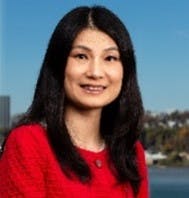
by Lan Cai, CFA
Lan Cai, CFA, is the Chief Investment Officer for The Pension Boards-United Church of Christ, Inc. Her team also serves as OCIO (Outsourced Chief Investment Officer) for United Church Funds. Lan joined the Pension Boards in 2015 from Millennium, where she was Managing Director and Portfolio Manager. Prior to Millennium, Lan was Partner and Head Portfolio Manager at PineBridge Investments, where she managed $20 billion in equity strategies including enhanced index, tax efficient income, portable alpha and merger arbitrage. Lan received her MBA from the University of Chicago. She serves on the boards of non-for-profit organizations and hedge funds.
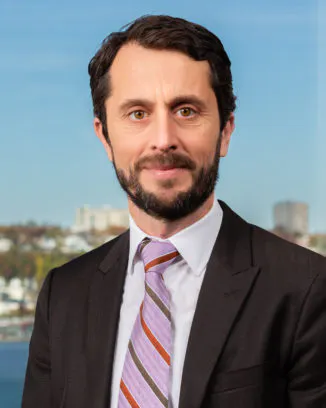
by Matthew Illian
Matthew joined United Church Funds in 2020 as the Director of Responsible Investing. He has extensive experience working with philanthropic organizations and other values-based investors in designing investment strategies that achieve both financial and mission-aligned impact. Matthew is a CFP® professional.
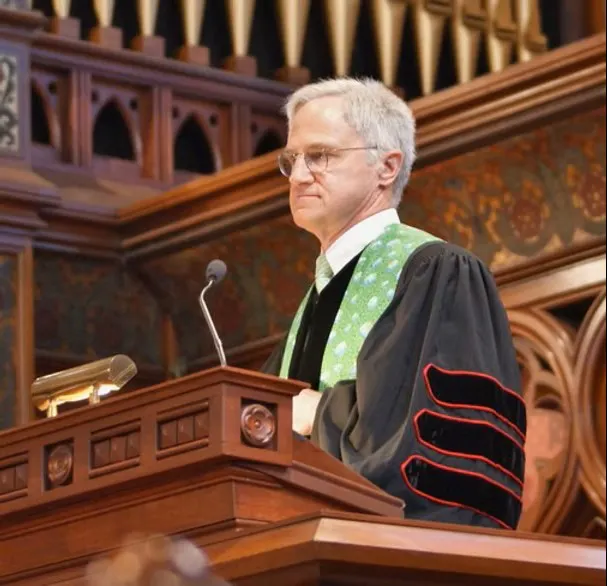
by Jim Antal
Jim is the Special Advisor on Climate Justice to the General Minister and President of the UCC. He is a denominational leader, climate activist, author and public theologian. An environmental activist since the first Earth Day, he has preached on the climate crisis since 1988 in over 400 settings and has engaged in non-violent civil disobedience on numerous occasions.
We all agree on the mission—invest the assets held in trust for retirement wisely and prudently, while maximizing the positive impact on climate change, human rights and providing capital to empower those challenged by a lack of economic success.David A. Klassen
Chief Investment Officer at the Pension Boards
RELATED ARTICLES
Green Bonds: One Way to Mitigate Climate Change
What is Sustainable Investing?
POPULAR RESOURCES
Why Sustainability Matters: 2024-25 Sustainability Report
The Pension Boards' 2024-25 Sustainability Report, themed "Why Sustainability Matters," centralizes on the organizations' commitment to corporate social responsibility and responsible investing by way of its journey and recent advancements in four areas: alignment; integration; impact; and engagement.
Evercall Magazine: A General Synod 35 Edition
An exploration of how individuals and institutions can establish deep, resilient foundations—because of ministry, and for the sake of ministry—to sustain faithful service and justice-driven leadership today and into the future.