
Answering The Call
15 min read
Because of Ministry—New Pathways to Leadership and Emerging Models of Sustainability Bring Hope to the Church
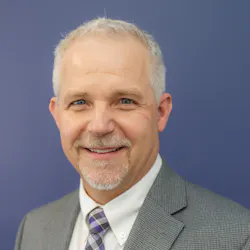
by Franz Rigert
Following the lead of our CEO and President, David A. Klassen, who shared at Synod his desire to listen deeply and learn how the church and the needs of ministry are evolving, we’re doing our best to engage more thoughtfully with those who serve throughout the United Church of Christ. We’re committed to understanding what ministry looks like today and how we can better support it. The conversation that follows is one example of that ongoing effort.
At the start of the year, we invited the Rev. Franz Rigert, Conference Minister for the Wisconsin Conference of the United Church of Christ, outgoing lead of the Council of Conference Ministers, and Trustee for the Pension Boards-UCC, to go into the deep with our Pension Boards colleagues about the state of the church from his perspective.
Franz shared his assessment of how congregations and clergy are navigating a rapidly changing post Covid landscape—declining attendance, increased pastoral stress, shifting cultural attitudes toward religion, and financial pressures that have reshaped ministry across the region. Yet alongside these challenges, our conversation with Franz highlighted creative adaptations, new pathways to leadership, and emerging models of sustainability—all meaningful signs of hope rooted in community, justice, and the enduring mission of the church. This in turn inspires us in our capacity as a financial ministry to innovate and serve ministry professionals who deserve a strong foundation from which to answer their calling.
—Rev. Dr. Paul L. Ramsey, Director, Church Relations and Philanthropy
Paul: Thank you, Franz, for joining us. Tell us about what you’re experiencing now in the Wisconsin Conference of the United Church of Christ.
Franz: Well, I can’t speak broadly for all conferences or all traditions, but I think generally this is true across the board—we have had declines since Covid. The pandemic was a convenient time for people to step away from the church. It was also a time for us to learn how to use technology, and that’s a blessing that came out of Covid.
We have 204 congregations. We’re fortunate, relative to many conferences, to have a robust staff—12 people. We have three camps that we still run, and we have a foundation for our finances, in which several of our congregations invest; it’s an alternative revenue stream for us. And we have a digital online learning platform. Those are all gifts we enjoy in the Wisconsin Conference.
Changing Landscape
Nevertheless, the landscape looks different—60% percent of our congregations now worship 40 [people] or fewer on a Sunday morning. Across the United States, I think 47% identify with a religious tradition, maybe 33% call themselves spiritual, and 20‑some percent are atheists or agnostics. So it’s a sea change in the religious landscape. A little under 40% of people say they attend church fairly regularly.
Over half of our congregations work part‑time. Many are engaged in shared ministry—one full‑time minister serving two part‑time places. That model has allowed us to keep full benefit packages, which is where the Pension Boards comes in strongly for ministers who need full‑time work.
A Dance Between the Prophetic Push and the Pastoral Pull
Partisan politics has been really challenging in recent years. Pastors have to learn the dance between the prophetic push—pushing ahead on justice, equity, and fairness—and the pastoral pull—loving people as much as you can and then nudging them forward. Yet anything said by someone on a different part of the political spectrum can be interpreted as “too much politics in the pulpit,” even when we’re just talking about the values of Jesus and loving our neighbors.
There is also fatigue among clergy. We’re seeing anxiety and stress. Pastors are after all human just like any of us, and their mental health is something we care about protecting. The strain on pastors is palpable compared to when I started this work 11 or 12 years ago, and certainly compared to when I began ministry many years ago.
Paul: Thank you. With that changing landscape and the post Covid reality, how is the mission of the local church and the conference changing to adapt? You mentioned bivocational ministry and yoked congregations—tell us more.
Franz: I think it’s always important for the church to remember its central mission: sharing the love of Jesus. The mission of the church remains to nurture our faith—the Word; to build community; and to do deeds of goodwill—to serve the world, work for justice, and advocate for the marginalized. That remains central no matter the context.
Share Resources, Build a Financial Foundation
But some things are especially important now. For example, clarifying our mission. All ministry is good ministry, but you can chase down all sorts of roads that become distractions unless you understand your central mission. Our mission in the Wisconsin Conference is to equip, support, and resource congregations, lay leaders, and pastors for vitality. That has been our mission for a decade.
Structure is also an issue. We come from a tradition with inherited governance structures and large buildings. In the Wisconsin Conference, we spent the last two years dissolving our four associations—the middle judicatory level between the conference and the local church. Other conferences have done this; it has been controversial in some places. We took our time, listened, explained, and went through the process of dissolving them last year.
We said to ourselves: “Let’s focus less on what we’re losing from the past and more on what we can gain in the future.” We asked people what they needed from the wider church. Two things came through clearly: relationships across the conference and more accessible shared resources.
So, we’re doing a two-year covenant tour where every church will be visited by lay leaders for listening and relationship building. And we’re launching a digital resource network on our website, so people can easily find ministry resources we’ve created, or others have contributed.
We don’t live with a lot of turfdom anymore. We don’t have to do everything ourselves. We share resources widely.
Paul: Thank you, Franz. When you and I accepted our call to ministry, it was, in many ways, a career—a different kind of profession. With the post Covid reality and changing culture, describe the challenges churches are experiencing in finding pastors.
Franz: It’s really tough. There are more openings than candidates. If you’re a church worshiping fewer than 40, chances are you won’t get any profiles. So, all bets are off, and we don’t approach searches the way we used to.
New Pathways to Ministry
We’re raising up people from our pews. Two years ago, I said, “Let’s raise up 20 potential authorized ministers from our churches in two years.” We created a program called, “Here I Am, Lord.” We have online gatherings of seven or eight people who have worked hard in their local church, felt a call, or are nearing semi-retirement. We’re cultivating them. Usually, they are licensed.
The difference is that in the ordained track, you do all the work and then get ordained, and people think you’re done learning. But we all need lifelong learning. In the licensed track, we do some work up front, give a credential early, and then the learning continues.
There are many pathways to ministry now: full-time, part-time, bridge work. Four or five of our churches have dedicated pulpit supply—one person on the first Sunday, another on the second—and one of them agrees to do pastoral visits and funerals. That’s their model because it’s the best they can do.
Seminaries are still thriving to some extent, partially because they’ve expanded participation in degrees beyond the Master of Divinity. Our Damascus Project—formerly Lay Academy—is growing. We have learners from conferences across the country. It’s a long, slow launch, but it’s one of the main ways forward to nurture and produce ministers.
Paul: In light of those things, how are churches working to pay people equitably and steward these ministries?
Franz: This is a real challenge—20, 30, 40 years ago—almost every church had a full‑time pastor. Churches have it in their DNA that they should have a full‑time pastor. When membership and resources decline, they cut in the two easiest places: compensation—because it’s the biggest part of the budget—and offerings to the wider church (OCWM).
At some point, there’s no more to give. So, we say: “It’s time to talk about the scope of ministry.” That’s our language for a non-full-time pastorate. It could be three-quarter time, two-thirds, half, or quarter time. Churches have been reluctant to downshift, but more are willing now. That’s when we set up shared partnerships to create a full-time position for a pastor.
Equity in pay is important. We tell committees: it’s not fair to pay less and still expect full‑time work. Pay the fair rate, then calculate what scope of ministry you can afford. That’s equitable.
The big issue is benefits. We work in a space with very strong benefits. A pastor making $50,000 or $60,000 might have $40,000 in benefits added on top. Quickly, churches say, “We don’t have benefits like that.” Then they ask, “How about we pay 10% of the pension instead of 14%? How about the Affordable Care Act?” This is the push and pull in an environment of scarcity. We invite them to think about abundance in a symbolic and prophetic way, and we negotiate.
Paul: Are there other trends or innovative ways congregations are working toward sustainability?
Franz: Yes, bivocational ministry—some pastors have two jobs. One of our ministers is three-quarter time and drives a bus.
Several churches have done well inviting nonprofits to use their space. Using church space is tough. I read an article this morning about a big United Methodist church in Milwaukee that closed. They’re going to put 30 apartments in it. I don’t know how the architecture will work, but it’s creative. To think about sustainability, you have to be creative, entrepreneurial, and willing to take risks.
Paul: Is there anything else you would like to add, Franz?
Franz: I’ll just say: this is a labor of love and a calling. We’re seeing signs of hope. Younger generations may not be institutional, but there is an appetite for the spiritual. Community-based ministries—pantries, medical equipment lending, elder care, childcare—are important and position the church to offer services others don’t.
Ecumenical partnering has progressed. We share ministers across traditions. There’s a movement in the Midwest called the Pathway to Palm Sunday. There will be marches on Palm Sunday about gospel values—love, fairness, justice, reconciliation. It’s a spiritually anchored movement with energy.
We have a new designation called STAR Churches—Small Town and Rural. The movement asks every church: What do you do spectacularly well? Almost every church can answer that. It affirms the importance and impact of small local churches.
There are still adventures. In three weeks, I’m leading a civil rights tour. We’re filling a 50-person bus and traveling from Milwaukee to Memphis, then Birmingham, Selma, and Montgomery. These experiences stoke passion for justice.
Lastly, we continue to commit to God’s calling to make the world more equitable, just, and neighbor‑loving. We believe the Spirit is still at work—and not doing the work alone. It depends on all of us.
Paul: Thank you so much. All of us are partners in ministry with the people you’re describing. Your context helps us tremendously. Thank you for your work with the church and our organization. We look forward to another conversation.
Franz: Thank you, Paul.
Get help with self-care.
If you are a Pension Boards member, you can speak with a Health Coach through our partner Health Advocate by calling 1.888.258.3428. Through confidential phone consultations, these specialists can walk you through health challenges, offer support for treatment decisions, wellness coaching, and more.
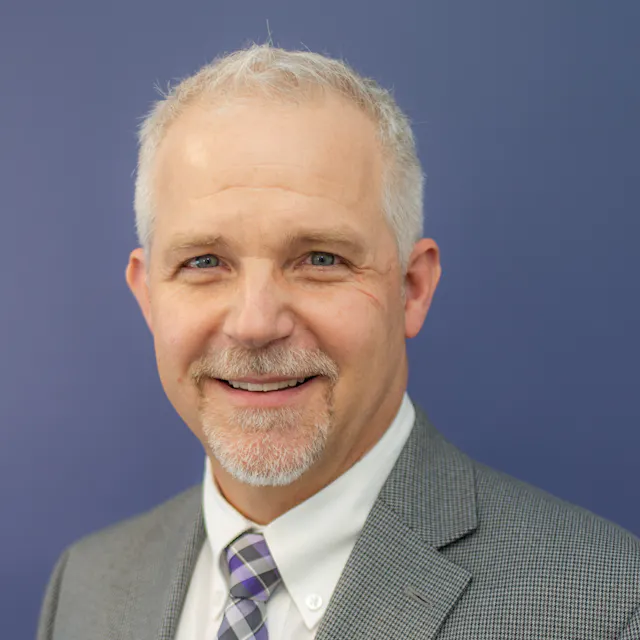
by Rev. Franz Rigert
Rev. Franz Rigert is the Conference Minister for the Wisconsin Conference of the United Church of Christ. Rev. Rigert grew up in Delavan, Wisconsin, where his father served the Congregational UCC church for more than 30 years. He attended UW Eau Claire and earned a Bachelor of Arts in Criminal Justice with a minor in religious studies. In 1989, Rev. Rigert enrolled in graduate school at Garrett-Evangelical Theological Seminary in Evanston, Illinois. In 1991, he married his spouse Trinn, and in 1992, he earned a Master of Divinity. He then served as Associate Minister at Kingswood United Methodist Church in Buffalo Grove, Illinois from 1992 to 1995. Following that, Rev. Rigert was called to Pilgrim United Church of Christ in Grafton, Wisconsin, where he served for nearly 20 years. During that tenure, the congregation grew significantly in membership and mission, eventually taking on a major building project that would provide a beautiful new sanctuary, several classrooms, and much needed gathering space. In fall of 2014, Rev. Rigert was called by the Wisconsin Conference of the United Church of Christ, to serve as Conference Minister. Franz and Trinn make their home in Cedarburg, Wisconsin, where Trinn has taught Early Childhood Special Education for 27 years. They share three twenty-something children—Mitchell, Jordan and Marianna. Franz enjoys mountain hiking, traveling, music, and nature.
Younger people called to ministry do not carry around the burden of the way things were in the 'good old days'... they seek emotional engagement with their faith.Rev. Dr. Sarah Drummond
RELATED ARTICLES
Sustaining Ministry at Crossroads Church
Church and Ministry Today
POPULAR RESOURCES
Evercall Magazine: A General Synod 35 Edition
An exploration of how individuals and institutions can establish deep, resilient foundations—because of ministry, and for the sake of ministry—to sustain faithful service and justice-driven leadership today and into the future.
Securing Your Foundation for the Ministry of Others
Changes in your ministry role, unexpected life events, or other personal challenges can impact your financial wellbeing and retirement plans. Secure your financial foundation.